Dechlorination consumables are the treatment materials that actually react with chlorine or chloramine during a dechlorination process. Unlike a diffuser, feeder, pump or analyzer that can be used repeatedly, these products are gradually consumed and have to be replaced or reordered as work is completed.
The category includes much more than dechlorination tablets. Commercial users can choose from tablets, slow-dissolving tablets, granular reducing agents, concentrated liquid products, bulk sulfite chemicals and specialized chlorine scavengers used in membrane-treatment systems.
The best form depends largely on where the treatment is taking place and how the chemical will be introduced into the water.
A utility crew flushing a hydrant may prefer tablets that can be carried with a portable diffuser. An industrial plant operating a continuous treatment process may instead meter sodium bisulfite from a tank. An RO facility may use a purpose-formulated chlorine scavenger ahead of its membranes.
Understanding those differences is the first step in comparing products.
Dechlorination Tablets
Tablets are one of the most common formats for temporary and field dechlorination.
They are typically placed inside a diffuser, feeder, basket, mat or similar device so that flowing water passes over the treatment material. As the tablet dissolves, the active ingredient reacts with chlorine in the water.
This format is particularly convenient for applications such as:
- hydrant flushing;
- water-main flushing;
- temporary discharge;
- storage-tank draining;
- automatic flushing;
- construction and commissioning work.
Several different tablet chemistries are available.
Vita-D-Chlor tablets, for example, use ascorbic acid, or Vitamin C, as the active reducing agent. Other commercial tablets use sodium sulfite.
The chemistry is important, but so is the way the tablet dissolves.
A fast-dissolving tablet may suit a supervised flushing operation where water is moving rapidly through a diffuser. A slow-dissolving tablet may be more appropriate where treatment takes place over a longer period.
Buyers should therefore compare both chemistry and dissolution characteristics, not simply tablet count or pail price.
Granular Dechlorination Products
Granular reducing agents provide another way to use many of the same chemistries.
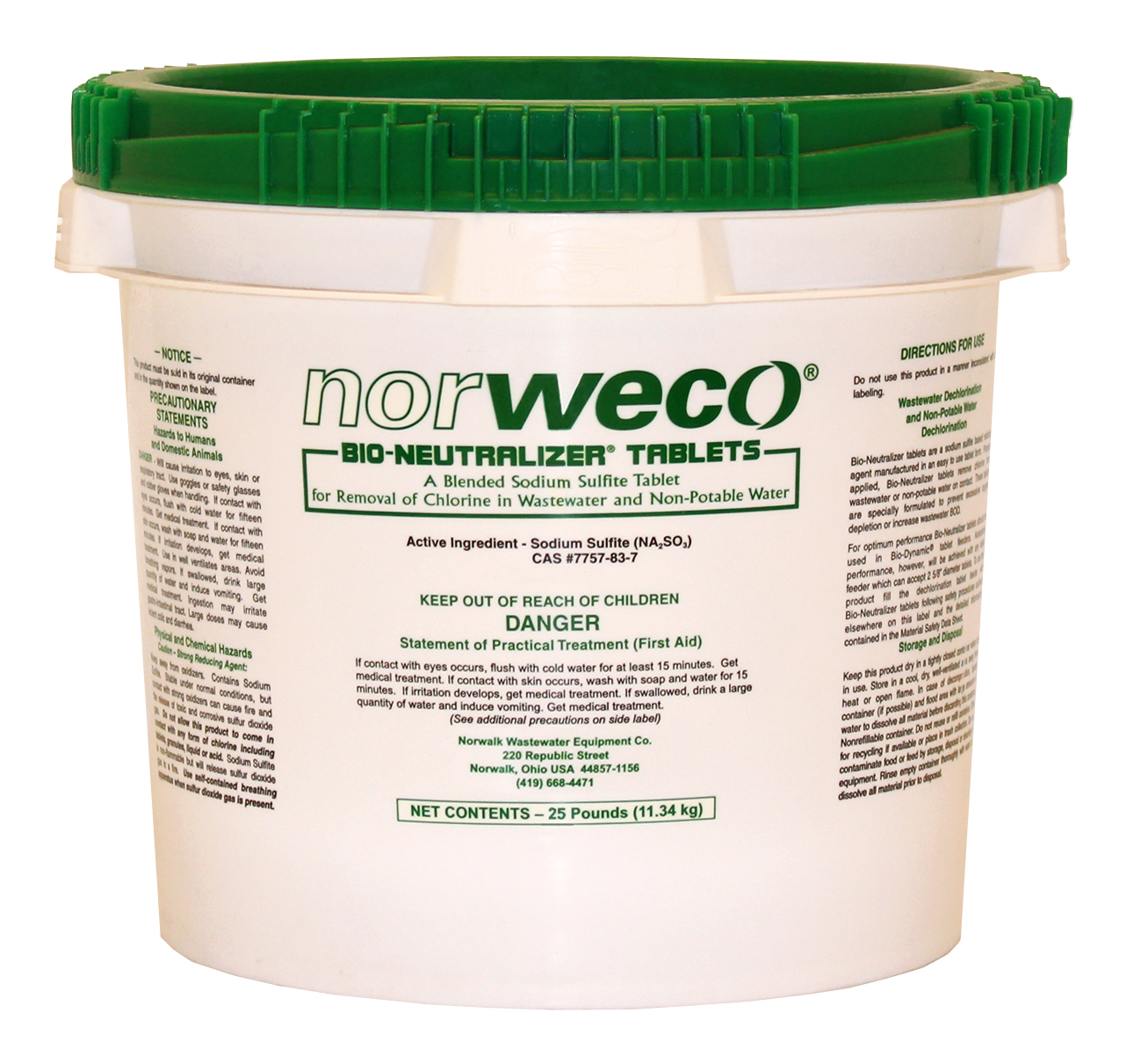
Instead of placing a solid tablet directly into the water stream, granular material can be dissolved or prepared for controlled introduction using a venturi, solution feeder or chemical metering system.
Granular products can be attractive where operators want more flexibility over feed concentration or where tablet delivery is not practical.
Examples in this category include ascorbic-acid and sodium-ascorbate granules.
Important purchasing considerations include:
- active chemistry;
- package size;
- preparation requirements;
- shelf life;
- compatibility with feed equipment;
- storage conditions;
- treatment capacity.
Granular products should not automatically be treated as substitutes for tablets. The operating setup is different, even where the underlying chemistry is similar.
Liquid and Bulk Dechlorination Chemicals
Larger and more permanent water-treatment systems commonly use liquid reducing chemicals rather than portable tablet systems.
Sodium bisulfite is widely used for chlorine reduction in commercial and industrial water treatment. Suppliers offer it in multiple concentrations and packaging formats, including drums, totes and bulk delivery.
Other liquid reducing agents include calcium thiosulfate and specialized sulfite-based formulations.
These products can be attractive where chemical feed is already automated or where large water volumes make tablet handling impractical.
A liquid system normally requires additional equipment, such as:
- chemical-storage tanks;
- metering pumps;
- injectors;
- piping;
- flow controls;
- monitoring instrumentation.
This makes the purchasing decision more involved than comparing chemical price alone.
The cost of the chemical, storage requirements, delivery logistics, pump compatibility and expected consumption rate all need to be considered.
Chlorine Scavengers for RO and Membrane Systems
Reverse-osmosis and membrane-treatment facilities create another distinct dechlorination requirement.
Many membrane systems require chlorine to be reduced before the water reaches downstream treatment equipment. In these applications, the objective is often equipment protection rather than environmental discharge.
Products such as Kuriverter AC-427 and Dechlor 104 are formulated specifically for this type of controlled chlorine scavenging.
These products are generally introduced through metering equipment rather than portable field diffusers.
When comparing membrane chlorine scavengers, buyers should review:
- membrane-system compatibility;
- active chemistry;
- product concentration;
- recommended feed method;
- storage requirements;
- manufacturer guidance;
- applicable certifications.
A chemical that works well for temporary hydrant flushing is not necessarily the product an RO operator would choose for continuous pretreatment.
Who Buys Dechlorination Consumables?
The customer base varies considerably by product type.
Municipal water utilities
Utilities commonly purchase tablets, granules and testing consumables for hydrant flushing, water-main work and storage-system maintenance.
Water-main and civil contractors
Contractors may purchase treatment materials for newly installed mains, repairs, pressure testing and project-related discharge.
Wastewater plants
Wastewater facilities commonly use bulk reducing chemicals through controlled feed systems.
Industrial water-treatment operators
Industrial users may treat process water, cooling water or wastewater using bulk liquids or filtration systems.
RO and membrane facilities
These users typically purchase concentrated chlorine scavengers or operate activated-carbon pretreatment systems.
Service and rental companies
Companies that provide flushing or temporary treatment equipment also require replacement treatment materials for each project.
Products to Compare
Vita-D-Chlor Tablets
Vita-D-Chlor Tablets are an ascorbic-acid-based option intended for field dechlorination applications including hydrant and water-main flushing.
They are available in several package sizes, which allows buyers to match inventory to expected project volume.
When evaluating these tablets, also check which diffuser, mat, sock or feeder will be used to introduce them into the water.
Vita-D-Chlor Slo-Tabs
Slo-Tabs use a slower-dissolving format than standard Vita-D-Chlor Tablets.
The distinction is useful where an application requires treatment material to remain available in the water stream for a longer period rather than dissolving quickly during an active flush.
Enviro-C
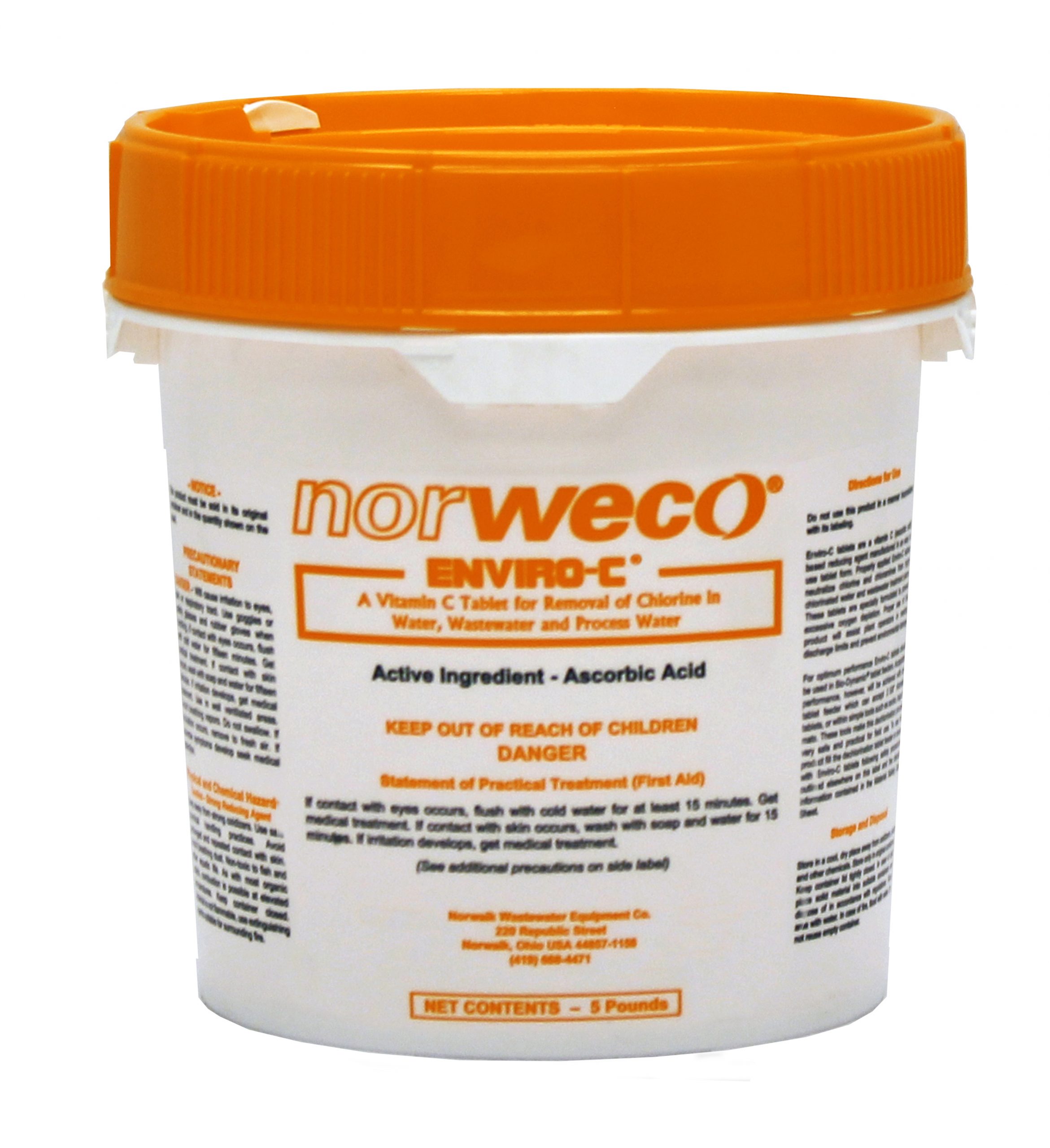
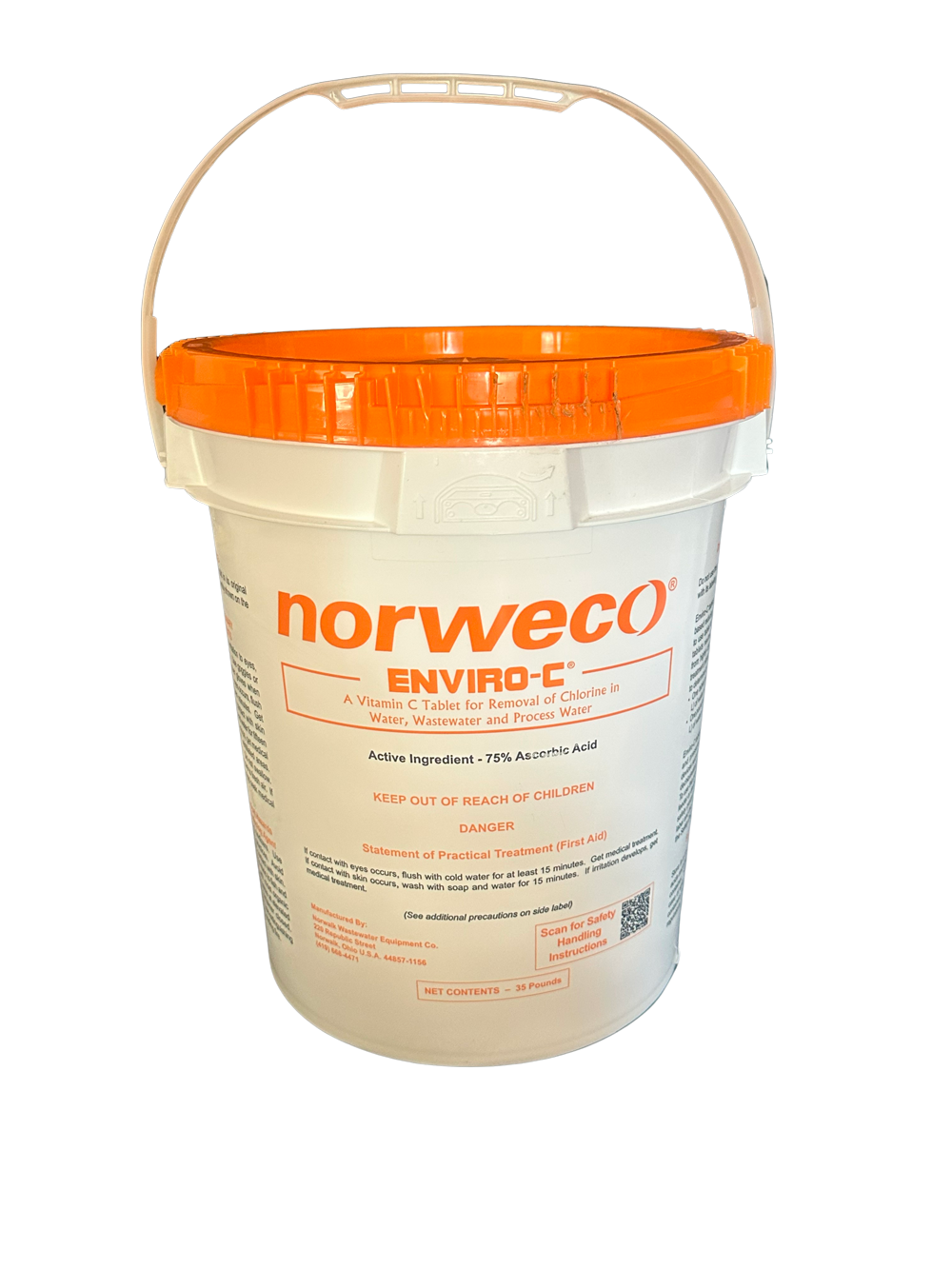
Norweco's Enviro-C family uses ascorbic-acid chemistry and is available in both tablet and granular forms.
It is useful for buyers who want Vitamin-C-based chemistry but need a choice between direct tablet application and a granular feed method.
Bio-Max
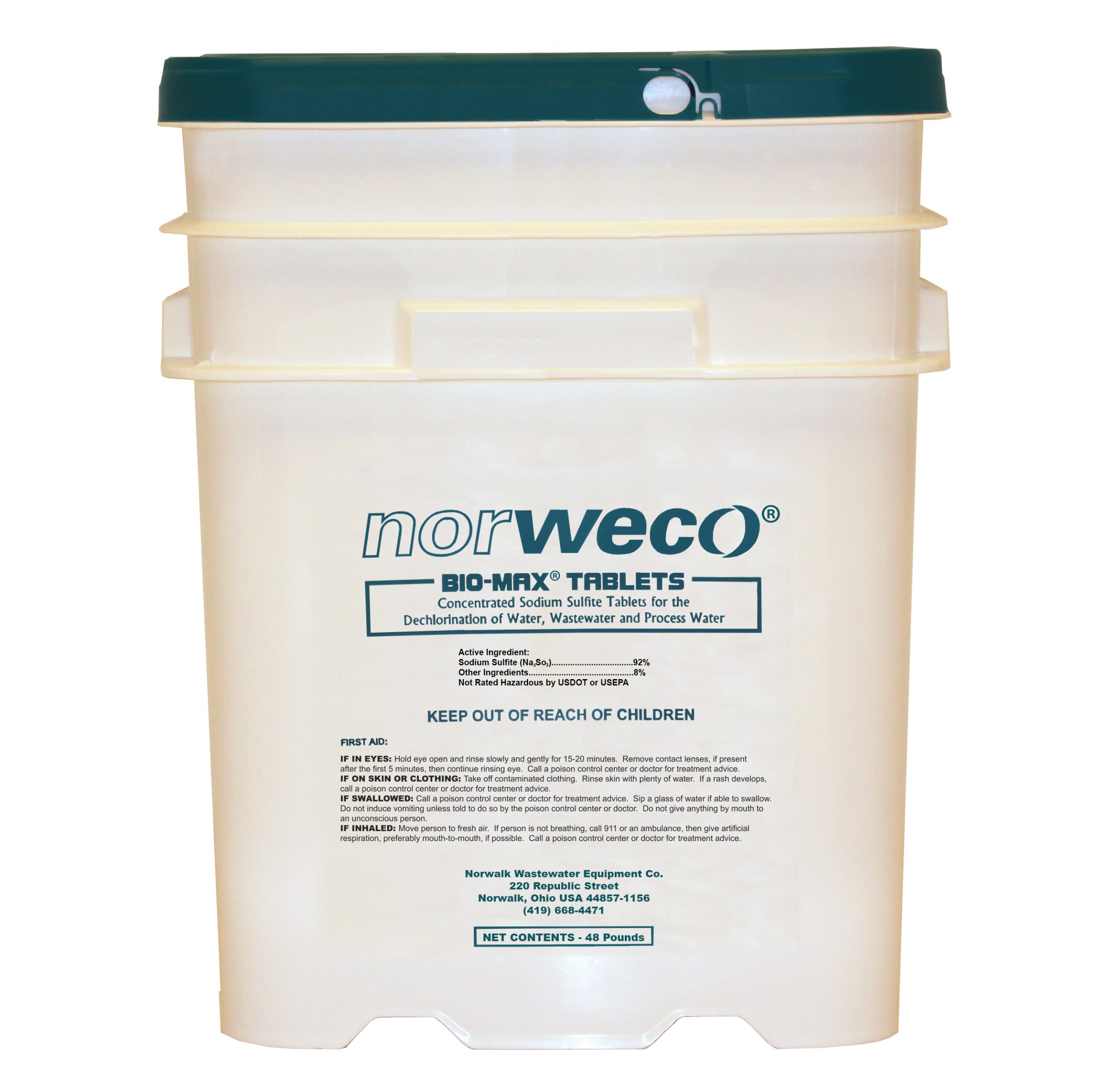
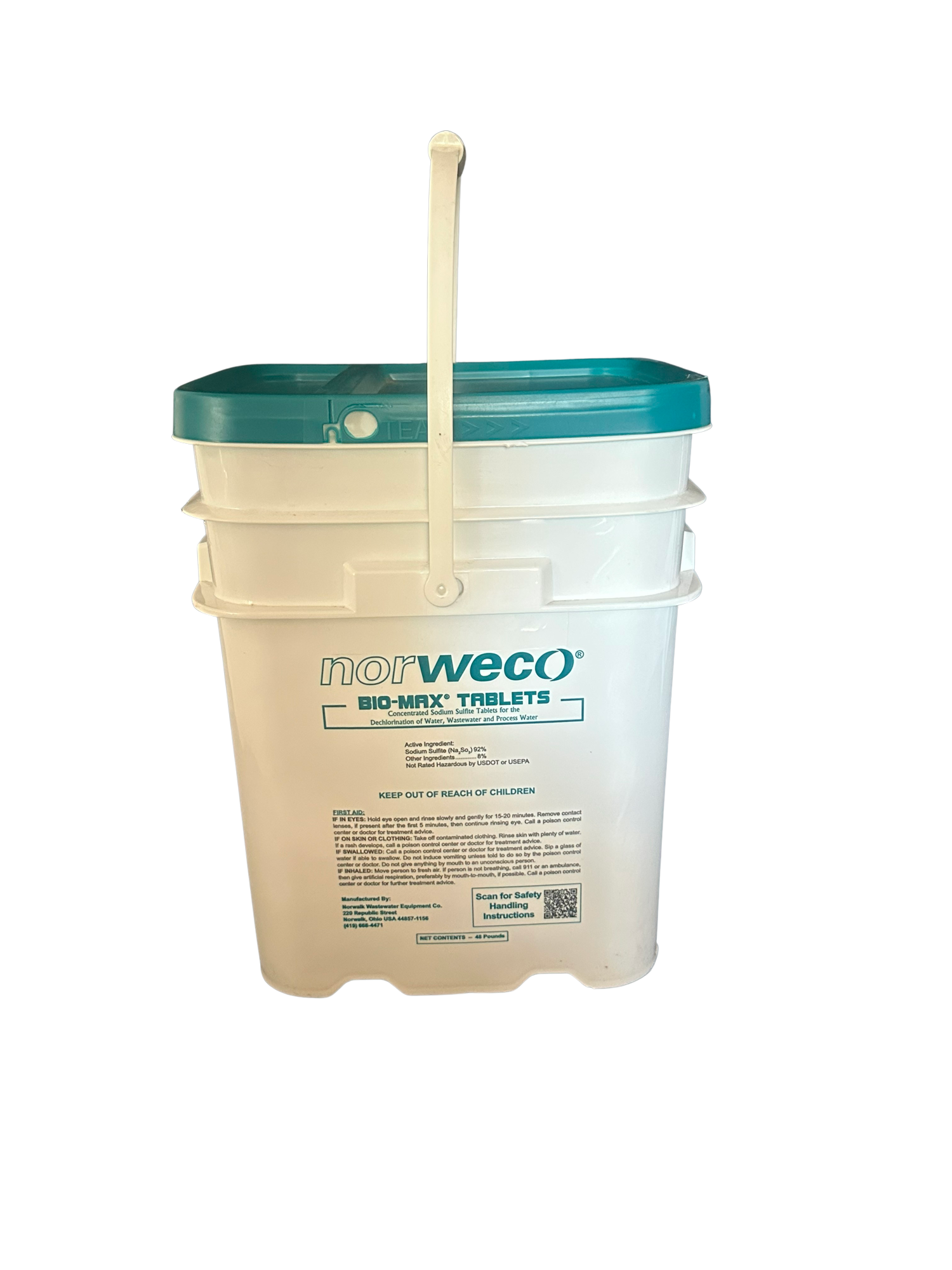
Bio-Max is a sodium-sulfite tablet product intended for water, wastewater and process-water dechlorination.
It can be used with compatible gravity feeders, pressure feeders and diffuser systems.
Sodium Bisulfite Solutions
Sodium bisulfite is better suited to buyers operating controlled chemical-feed systems than to crews simply looking for portable hydrant tablets.
Available concentrations, packaging and grades differ by manufacturer, so buyers should compare the exact formulation rather than treating all sodium-bisulfite products as identical.
Kuriverter AC-427 and Dechlor 104
These products represent the membrane-treatment side of dechlorination.
They are most relevant to RO and industrial process operators who need controlled chlorine removal upstream of sensitive treatment equipment.
What to Consider Before Buying
Start with the application rather than the chemical name.
Determine:
- Where is the water being treated?
- How much water will be treated?
- Is the process temporary or continuous?
- What feed equipment is already available?
- Is free chlorine, chloramine or another oxidant being addressed?
- What residual level must be achieved?
- How will the treatment result be verified?
For field work, portability and ease of handling can be major advantages.
For permanent installations, feed control and chemical logistics often matter more.
The correct consumable is therefore not simply the product with the lowest cost per pound. It is the product that fits the chemistry, treatment equipment and operating conditions of the job.