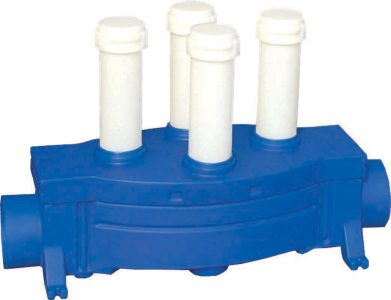
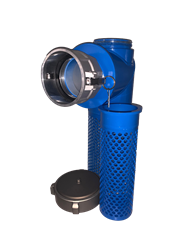
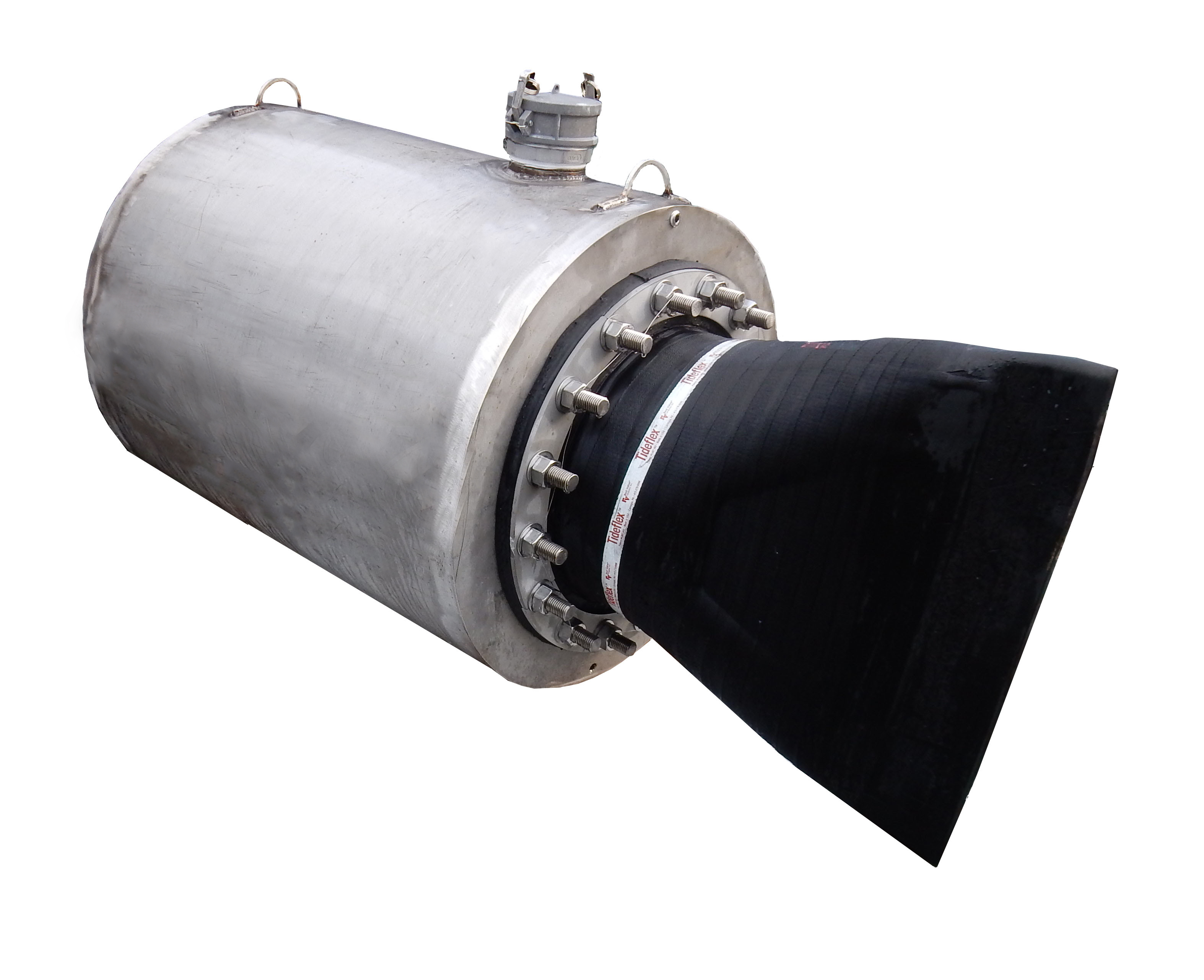
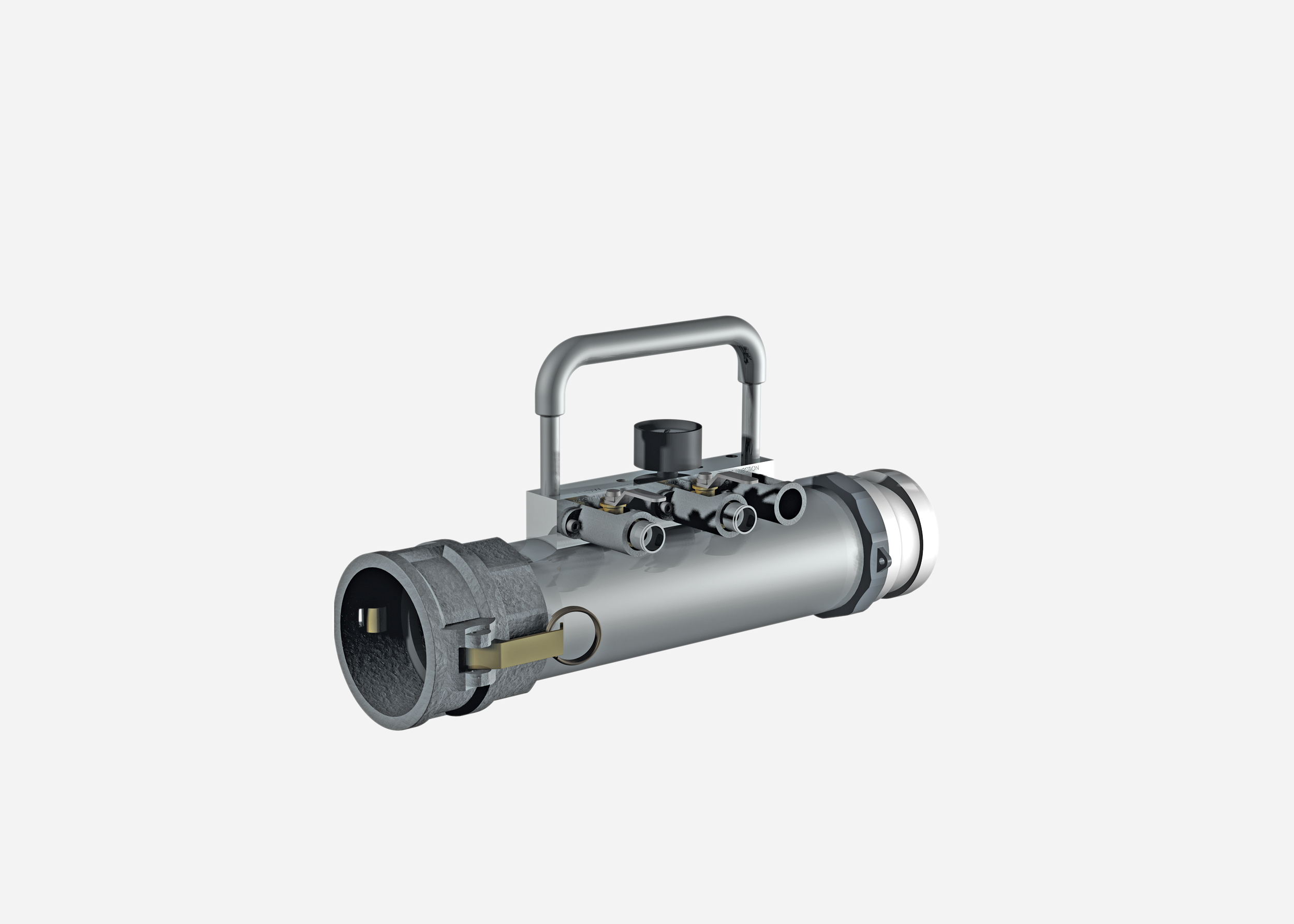
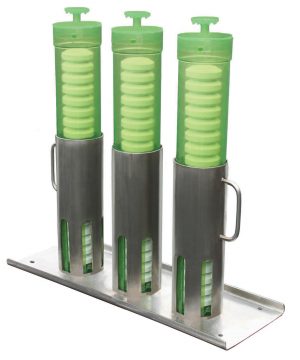
Dechlorination equipment controls how treatment chemistry is introduced into chlorinated water.
For a small hydrant-flushing job, this may involve a compact diffuser holding several tablets. Larger projects may use high-flow dechlorinators, pressurized tablet feeders or liquid injection equipment. Permanent facilities can use metering systems, automated feed equipment and process controls.
The right equipment depends on much more than maximum flow.
Connection size, treatment chemistry, portability, pressure, tablet capacity, equipment weight and the type of discharge all influence which system is practical.
A buyer should therefore begin with the operating conditions of the job rather than choosing equipment based on appearance or price alone.
Hydrant Dechlorination Diffusers
Hydrant diffusers are among the most recognizable products in this category.
They attach to a hydrant or hose connection and help control the discharge while exposing the water to dechlorination tablets or another treatment method.
Some are designed for relatively modest flushing flows. Others are built for considerably higher volumes.
Important specifications include:
- minimum and maximum flow;
- inlet connection;
- pressure rating;
- tablet capacity;
- equipment weight;
- construction material;
- supported chemistry;
- discharge configuration.
A compact aluminum unit may be easier for a crew to carry and store, while a heavier steel diffuser may be selected for different operating conditions.
The published flow range should always be checked against the expected flushing rate.
Tablet Feeders
Tablet feeders provide a controlled way of exposing water to solid dechlorination chemistry.
Depending on the product, water may pass directly through a tablet chamber or through a pressure-rated feeder designed to maintain contact with the treatment material.
Gravity feeders are also available for applications where pressurized operation is not required.
Tablet feeders can be used in:
- water and wastewater treatment;
- hydrant flushing;
- automatic flushing;
- tank and reservoir applications;
- temporary project discharge.
The feeder must be compatible with the tablet being used.
Tablet dimensions, dissolution rate and chemistry all matter.
Liquid Injection Equipment
Liquid dechlorination systems use pumps, injectors or venturi-style devices to introduce a prepared reducing solution into the water.
This approach can provide more control over treatment than a passive tablet system.
It can also be more appropriate for:
- higher chlorine concentrations;
- larger water volumes;
- extended project durations;
- process systems;
- users already equipped to handle liquid treatment chemicals.
A liquid injector may be relatively compact, but it still requires a supply of treatment solution and a suitable feed arrangement.
When comparing these systems, check:
- connection;
- flow capacity;
- compatible chemical;
- feed-rate control;
- chemical tank requirements;
- mounting options.
Automatic Flushing Systems
Automatic flushing equipment is used where a water utility wants a location to flush without requiring a crew to manually open and close the hydrant each time.
Some automatic flushing systems offer optional dechlorination components.
This creates a different buying decision from a portable diffuser.
The operator may need to consider:
- programmed flushing schedule;
- valve size;
- flow rate;
- battery or controller requirements;
- security;
- drainage;
- dechlorination accessory compatibility.
These systems are particularly useful where flushing is performed repeatedly at the same location.
Portable Versus Permanent Equipment
Portability is a major factor in field equipment.
A contractor or utility crew may need to carry a diffuser between numerous locations during a single day. Weight, size and connection type matter because the equipment will spend considerable time being transported rather than operating.
Permanent or semi-permanent systems are evaluated differently.
A treatment plant is more likely to prioritize:
- feed accuracy;
- maintenance access;
- automation;
- process integration;
- long operating cycles;
- monitoring.
The equipment category therefore covers everything from small field tools to substantial treatment systems.
Buyers should compare products within the correct subcategory instead of treating all dechlorination equipment as direct alternatives.
Products to Compare
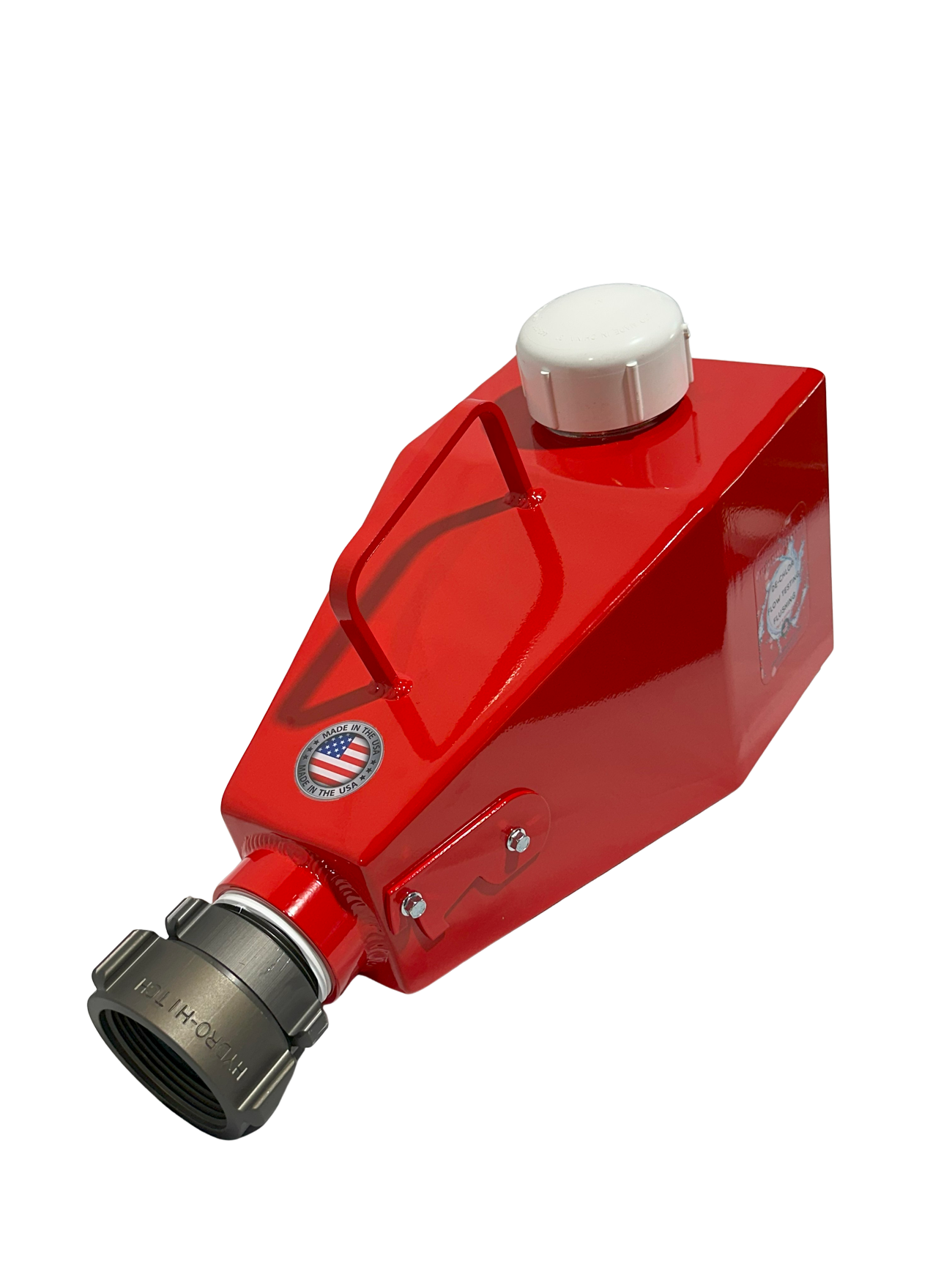
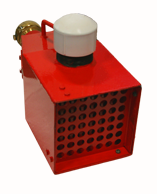
ZDe-Chlorinator NEMA-200B
The NEMA-200B is a compact tablet diffuser intended for lower-flow hydrant applications.
Its relatively small size makes it attractive where portability matters and the required flow falls within its published operating range.
It should be compared with other compact hydrant dechlorinators rather than with large process-feed systems.
ZDe-Chlorinator NEMA-200
The NEMA-200 occupies a higher-flow position within the same general equipment family.
Buyers comparing the NEMA-200 and NEMA-200B should focus on flow requirements, tablet capacity and expected field use.
LPD-250
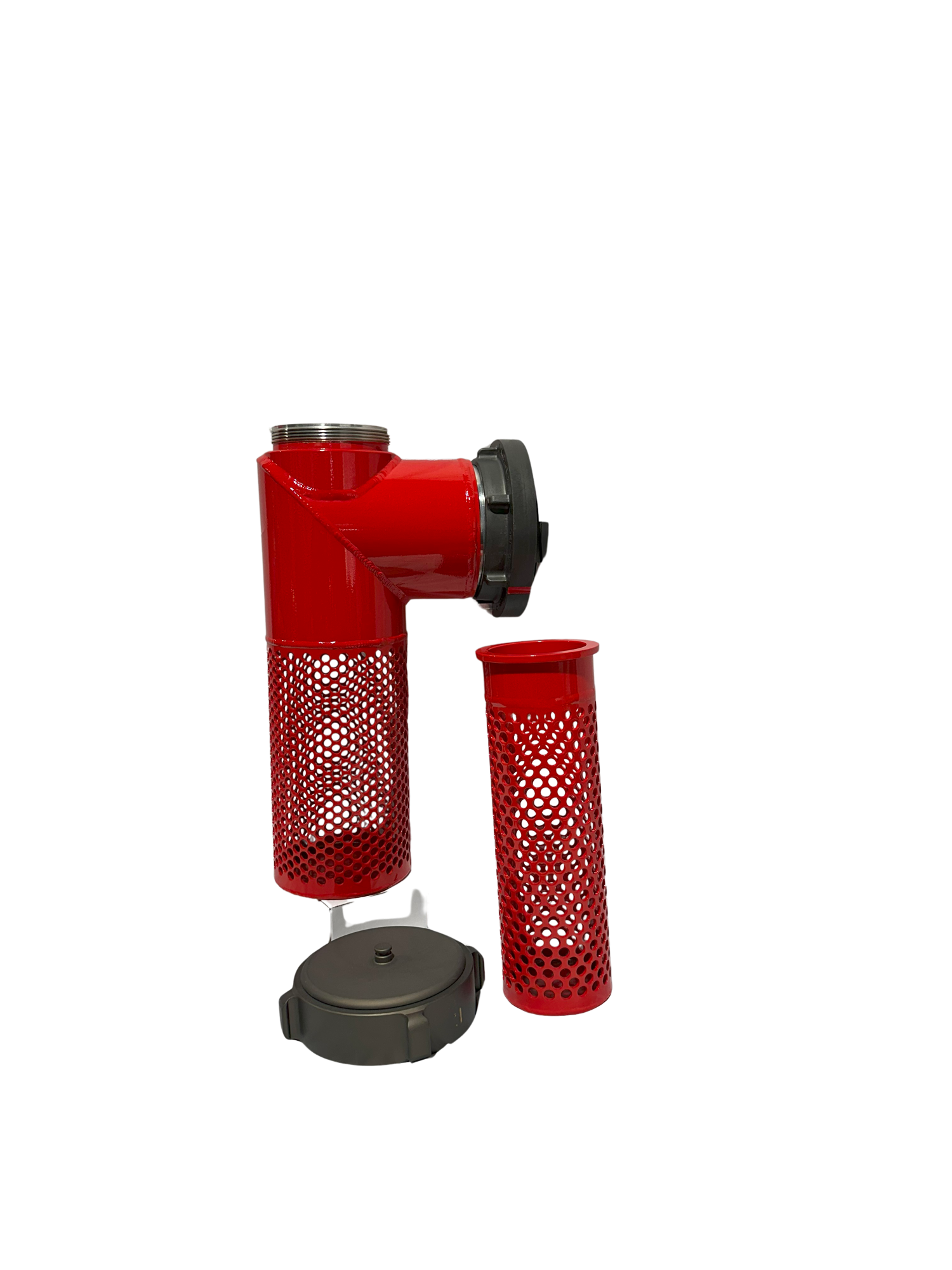
The LPD-250 is a tablet-based hydrant diffuser available in steel and aluminum configurations.
The aluminum version can be attractive where lower equipment weight is a priority, while both configurations should be evaluated against the required flow and connection.
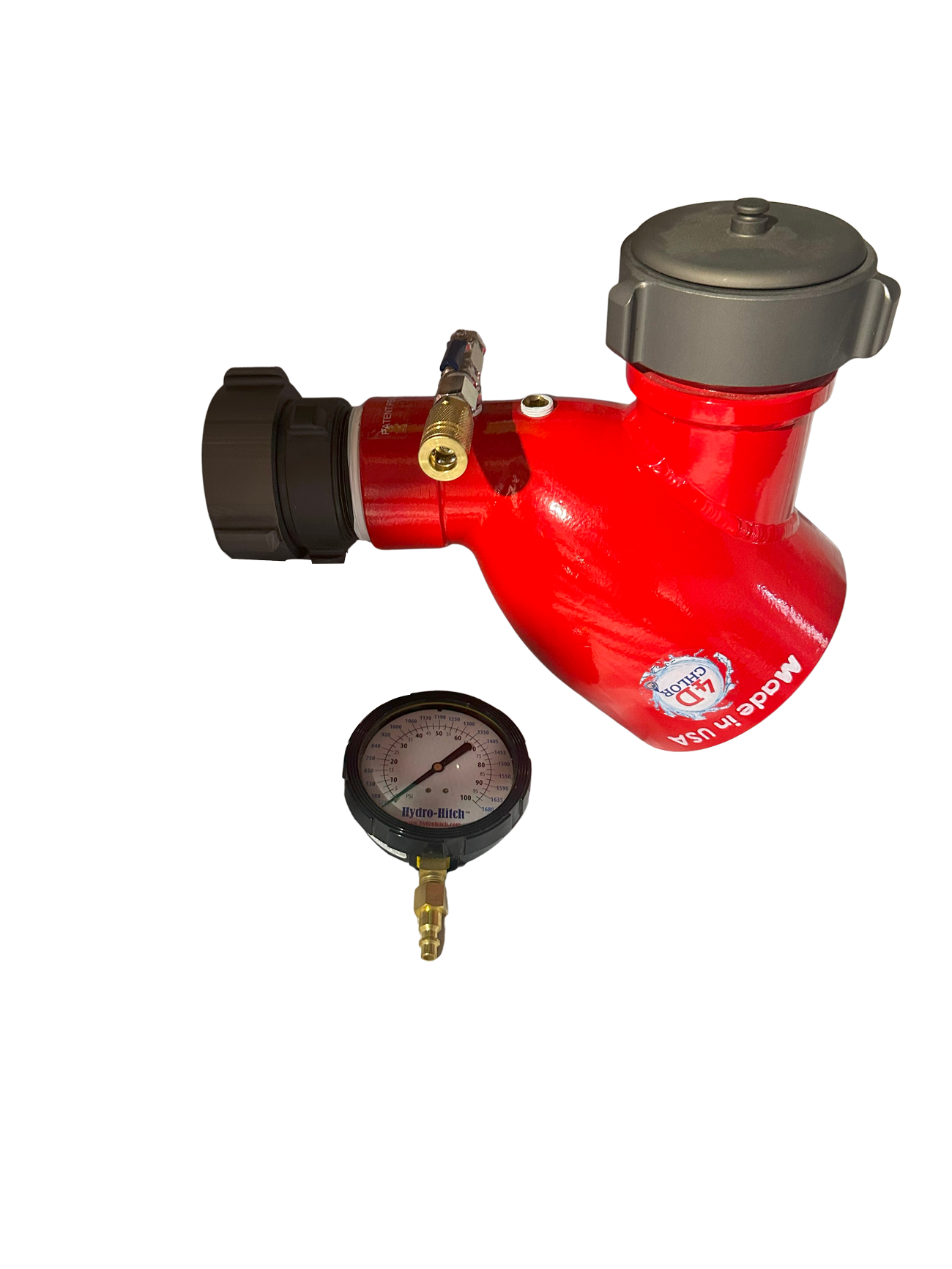
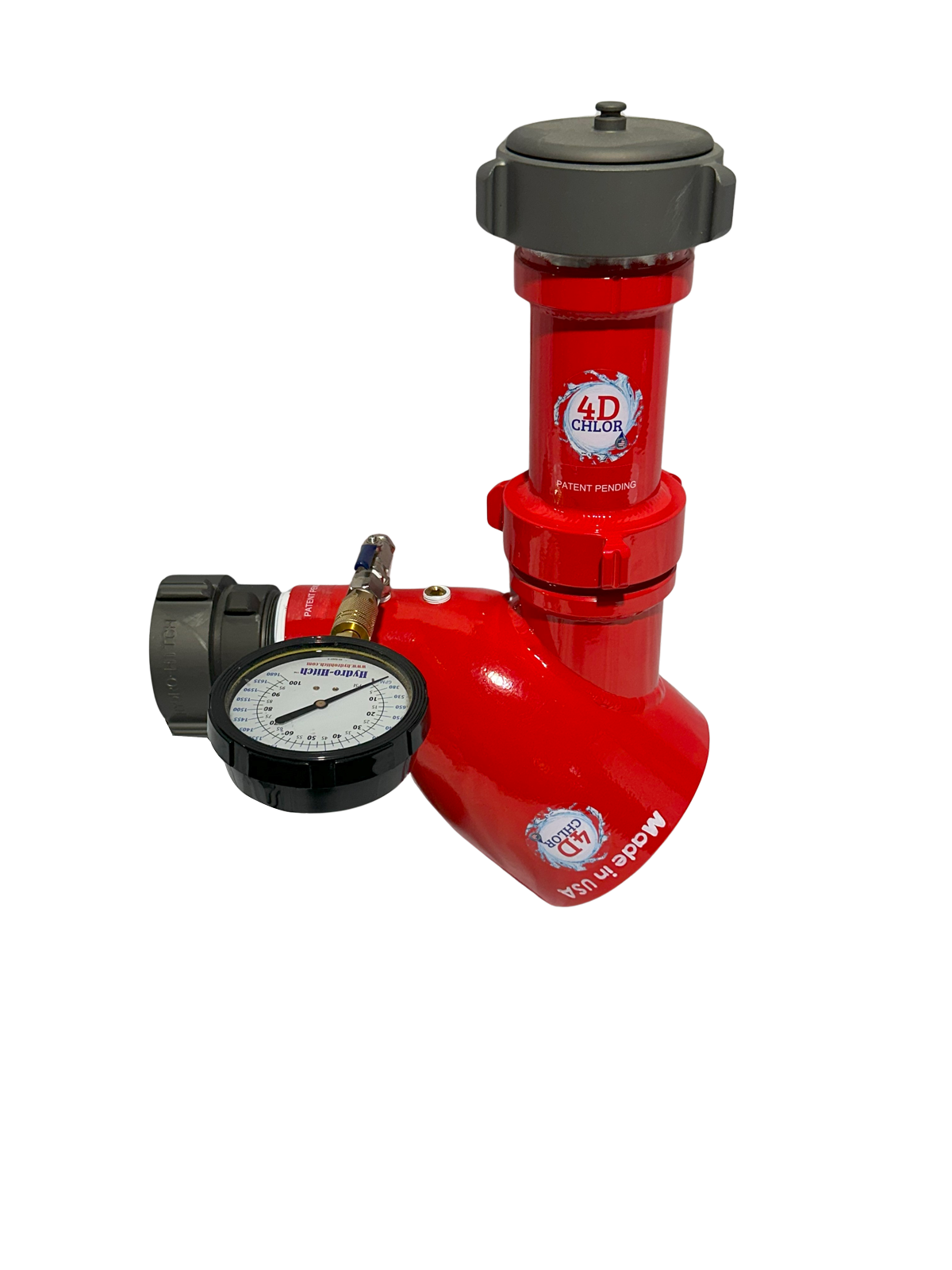
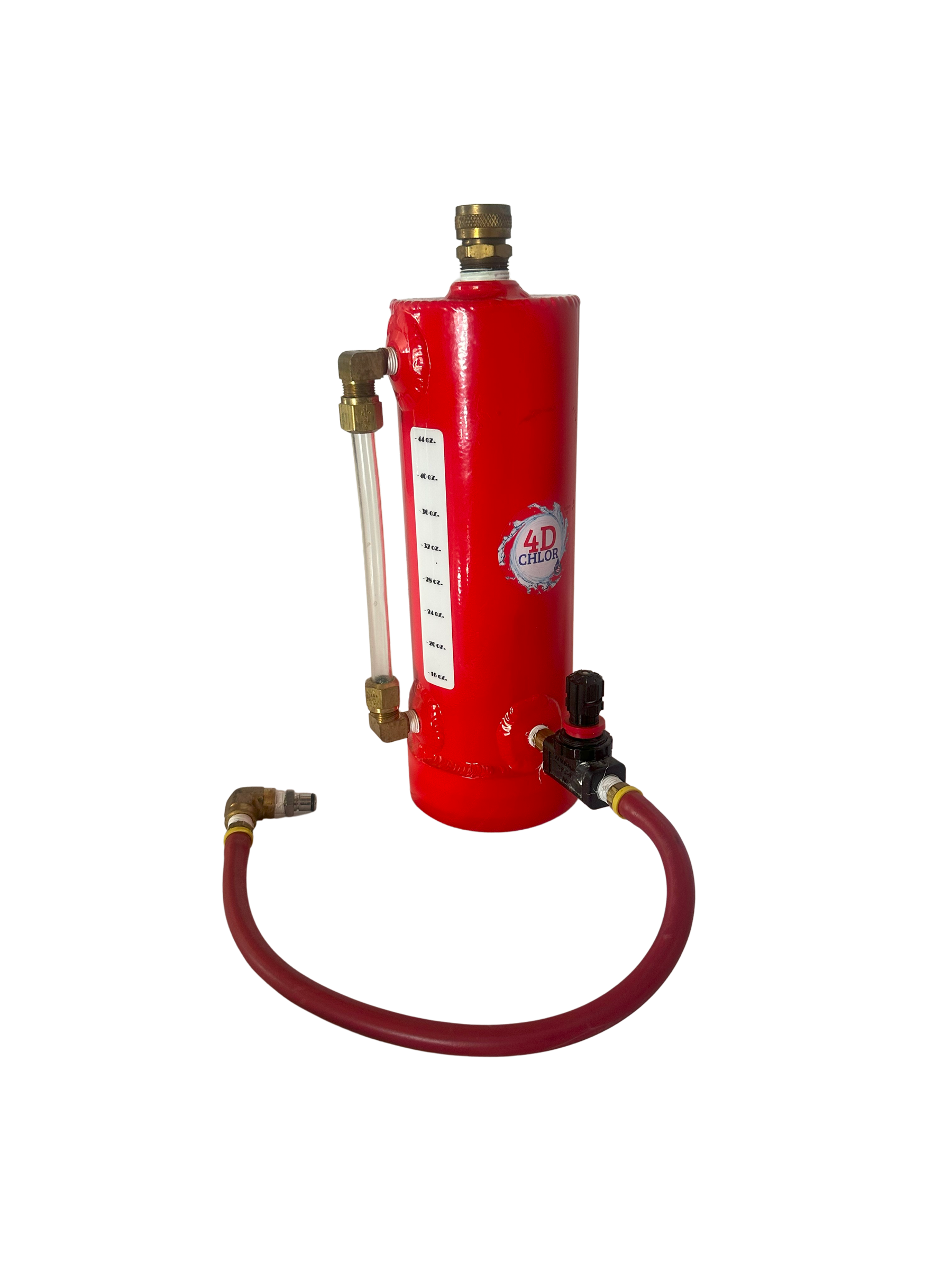
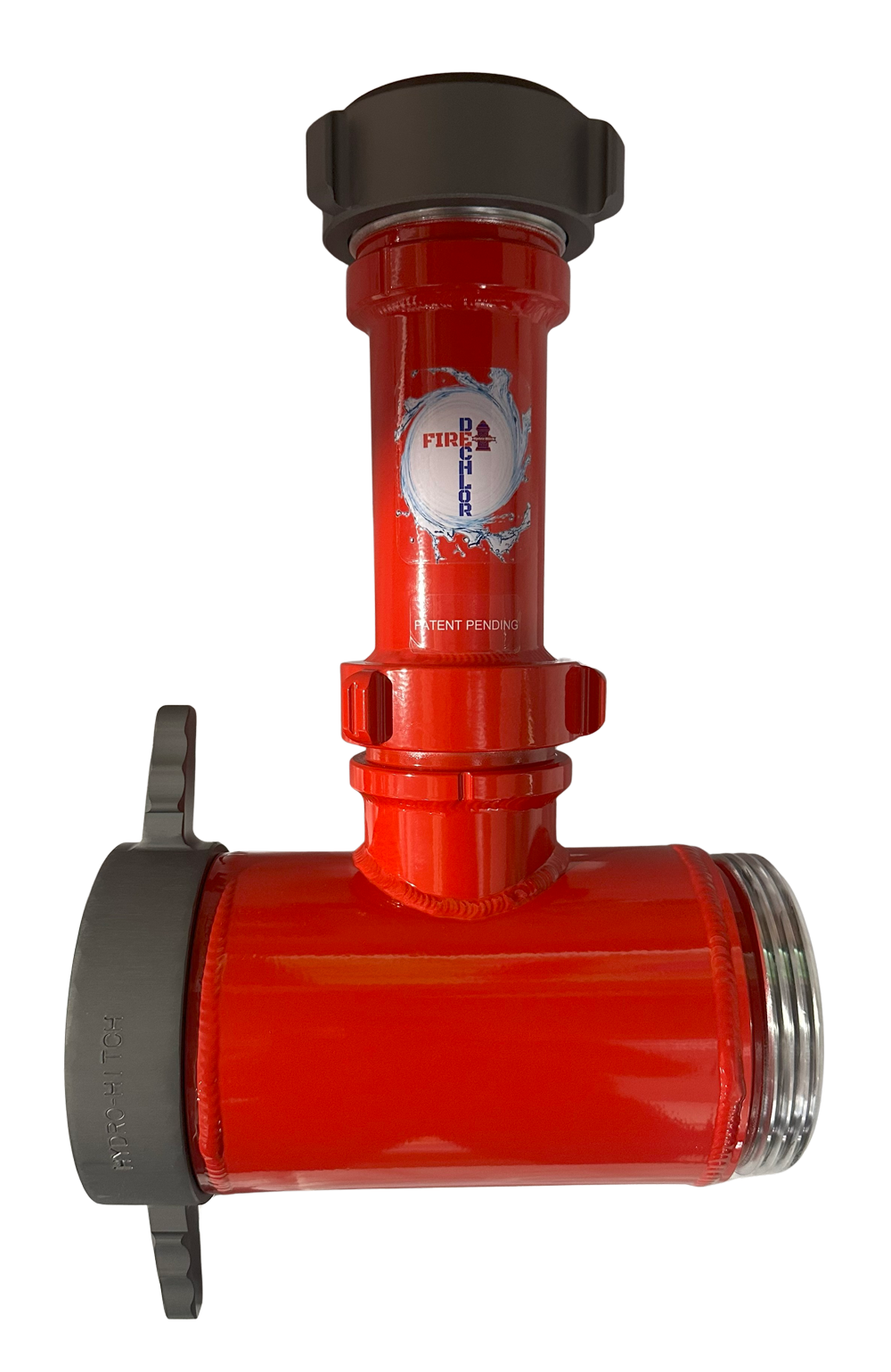
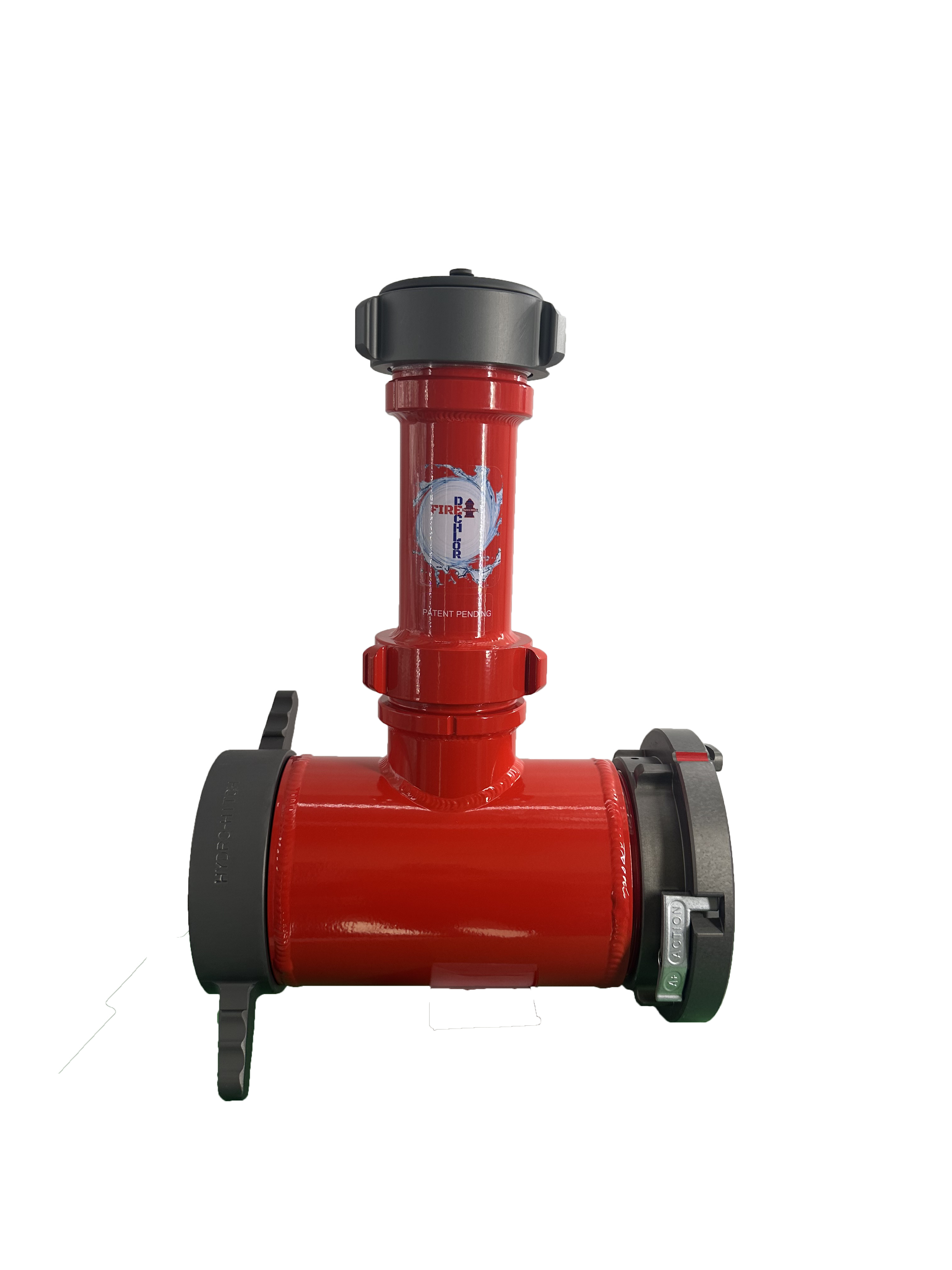
Hydro-Hitch 4D-Chlor
The 4D-Chlor system represents another portable approach to hydrant and water-main dechlorination.
Available tablet and liquid components allow buyers to configure the equipment around different treatment methods.
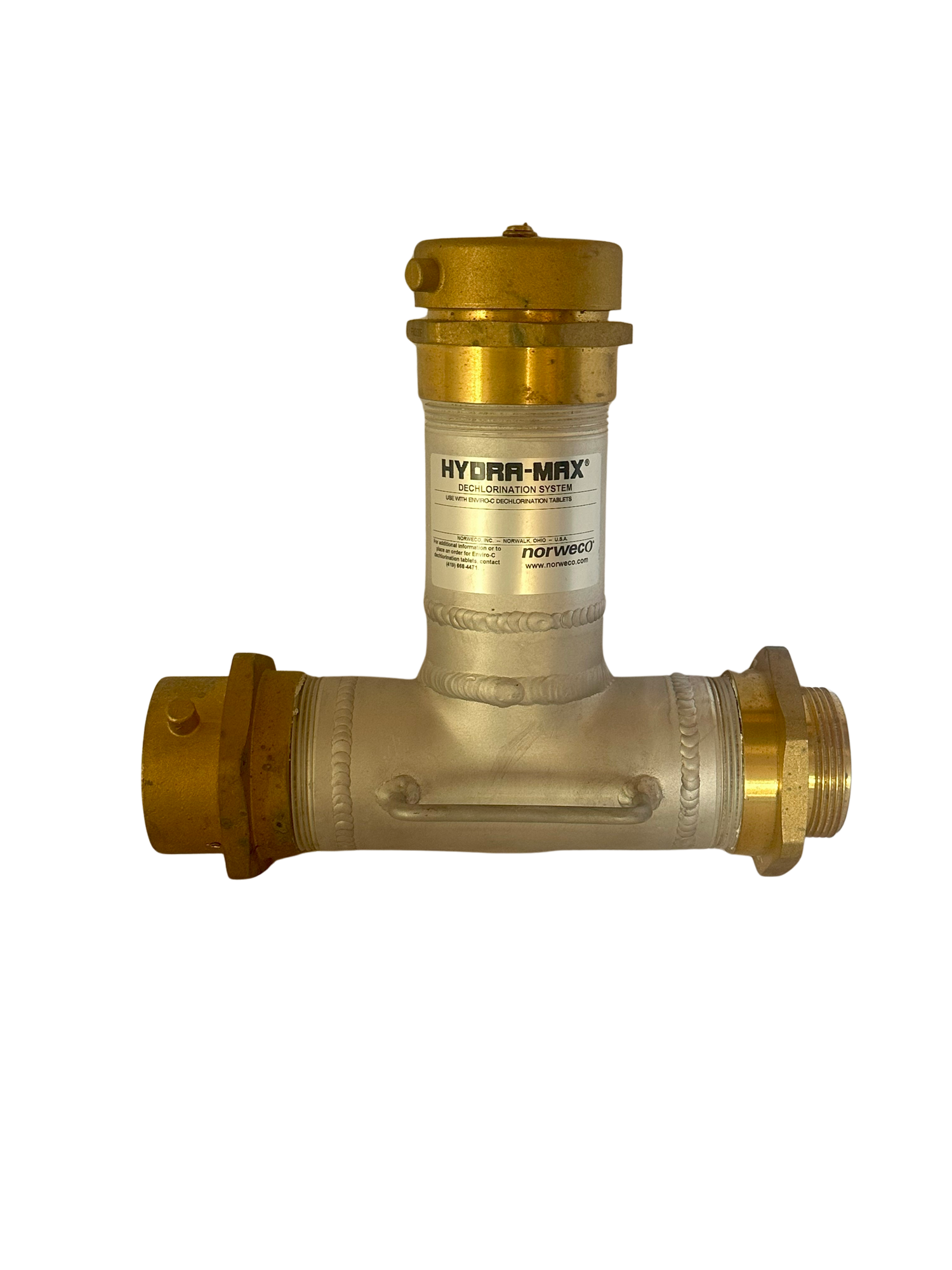
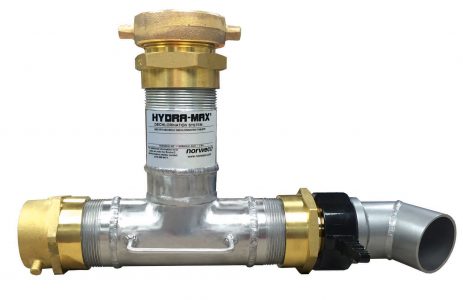
Hydra-Max
Hydra-Max uses a pressurized tablet-feed configuration.
It is relevant to buyers who need a treatment device for pressurized water rather than a simple passive tablet holder.
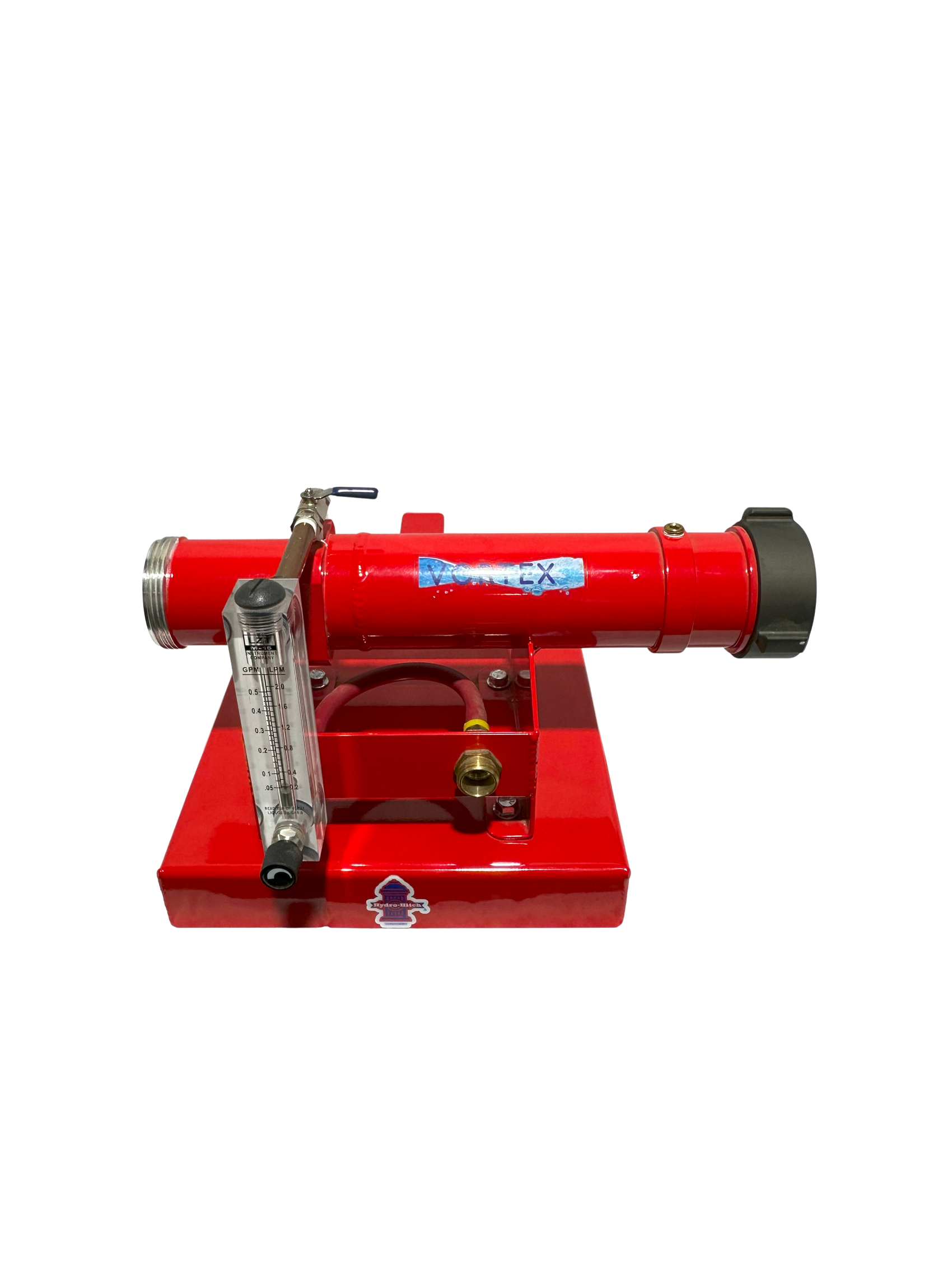
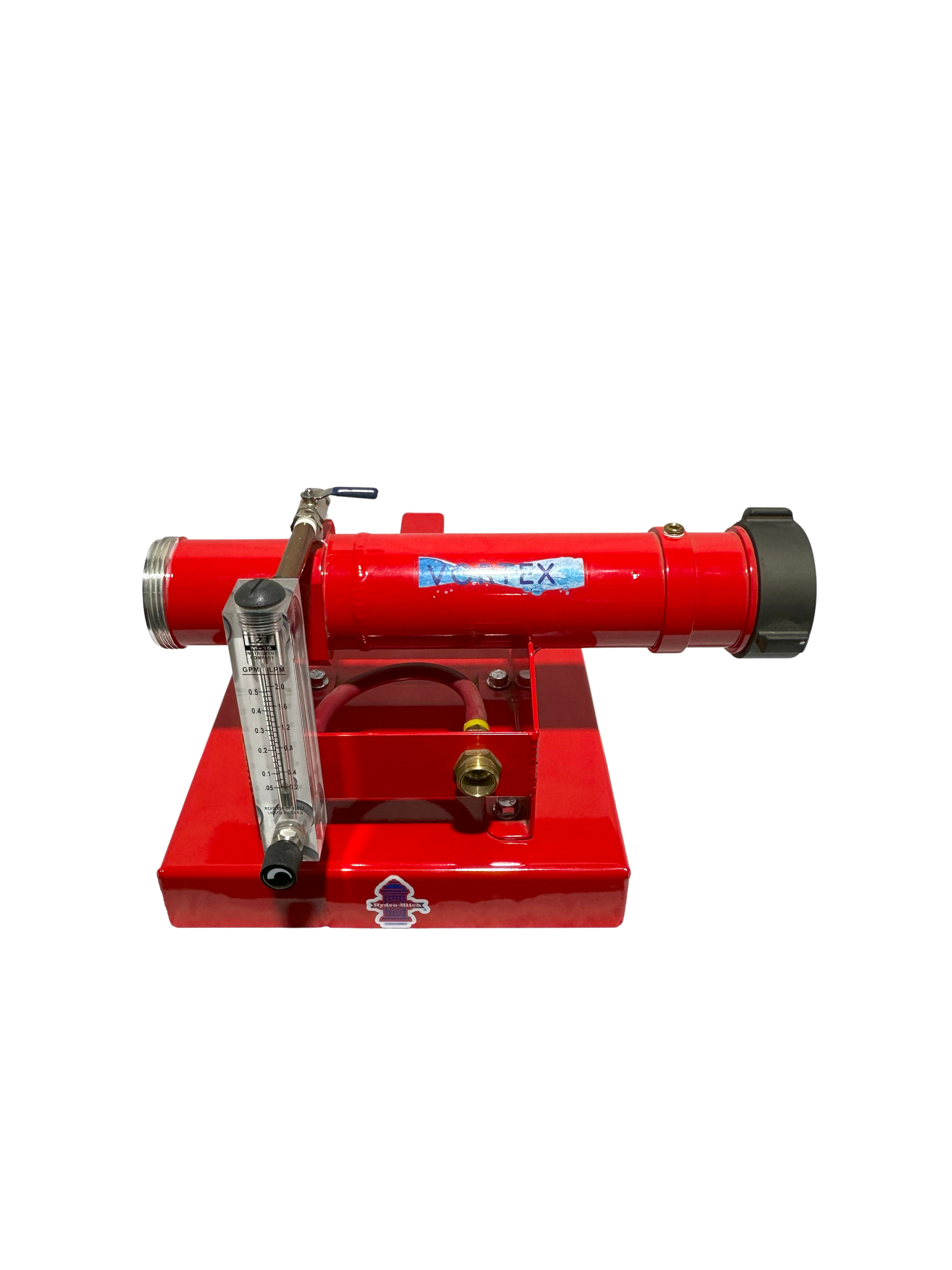
Vortex Liquid Injector
The Vortex is useful for users who prefer liquid chemical injection.
Its design allows it to be used with hydrant-flushing and water-main work while providing a different treatment method from tablet equipment.
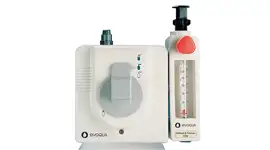
Eclipse 9700
The Eclipse 9700 is primarily an automatic flushing device rather than a dedicated dechlorinator.
Its optional dechlorination components make it relevant where a utility wants automatic flushing and treatment at the same site.
Key Specifications to Compare
Flow
This is usually the first filter to use.
Equipment that cannot accommodate the expected flow should be eliminated before comparing price or accessories.
Connection
Common hydrant equipment may use NH/NST, Storz, camlock or other connections.
Confirm what is available at the jobsite.
Treatment Method
Determine whether the equipment uses:
- tablets;
- granular solution;
- liquid chemical;
- another feed method.
Weight
A difference of 10 or 20 pounds can matter to a crew carrying equipment repeatedly.
Material
Steel, aluminum and other construction materials affect weight, durability and handling.
Tablet or Chemical Capacity
A small chamber may require more frequent attention during long flushing operations.
Portability
Consider how easily the unit can be:
- transported;
- mounted;
- connected;
- drained;
- stored.
How to Choose Dechlorination Equipment
Start by recording the basic job conditions:
Application
Hydrant, new water main, tank, wastewater process or other use.
Expected flow
Use the actual or estimated operating flow rather than hydrant size alone.
Chlorine level
Higher residuals may change the required treatment method.
Treatment chemistry
Determine whether the operator prefers tablets, liquid chemistry or another process.
Connection
Identify the available hydrant, hose or piping connection.
Frequency of use
Equipment used every day may justify different design priorities from equipment purchased for occasional project work.
Once these factors are known, the number of appropriate products becomes much smaller and comparisons become considerably more meaningful.