Dechlorination does not always require adding a chemical directly to the water.
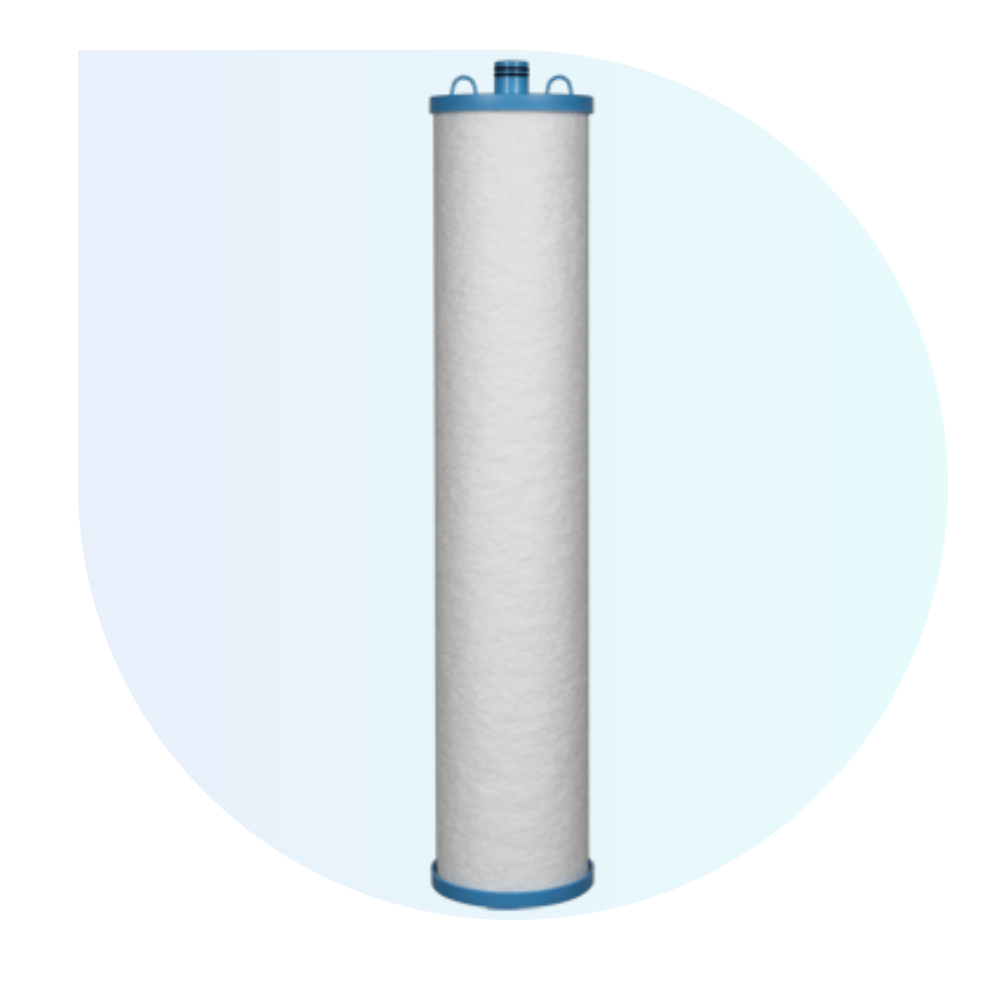
Activated-carbon filtration provides another approach. Water passes through a bed, cartridge or vessel containing carbon, where chlorine or chloramine can be reduced as the water contacts the media.
This treatment method is particularly common in process-water and pretreatment applications where water continuously passes through an established filtration system.
Activated carbon is used for many water-treatment purposes, so buyers should pay close attention to whether a particular grade is specifically suitable for chlorine, chloramine or both.
Where Activated Carbon Is Used for Dechlorination
Commercial applications can include:
- RO pretreatment;
- industrial process water;
- food and beverage processing;
- high-purity water systems;
- commercial filtration;
- cooling and manufacturing processes.
Unlike a temporary hydrant diffuser, a carbon system generally operates as part of a treatment train.
Water enters a vessel or cartridge, passes through the carbon and then continues downstream.
The media therefore has to be evaluated together with:
- flow;
- vessel size;
- bed depth;
- contact time;
- backwashing;
- pressure loss;
- replacement schedule.
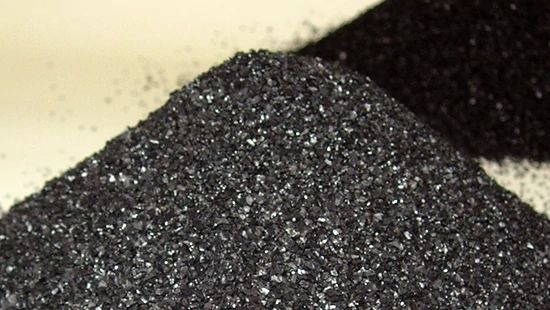
Granular Activated Carbon
Granular activated carbon, commonly abbreviated GAC, is widely used in commercial water treatment.
It is available from a number of manufacturers and can be produced from different raw materials, including:
- bituminous coal;
- coconut shell;
- other carbonaceous materials.
The source material influences properties such as pore structure, hardness and density.
That does not mean one carbon source is automatically superior for every dechlorination application.
Buyers should instead compare the manufacturer's specifications for the intended use.
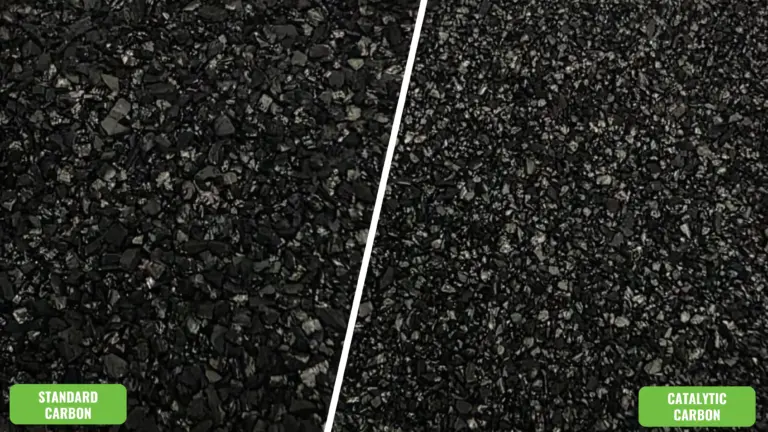
Catalytic Activated Carbon
Chloramine removal often requires more specialized carbon performance than ordinary free-chlorine reduction.
Catalytic activated carbon is treated or manufactured to provide greater catalytic activity.
Manufacturers such as Clack and Haycarb offer catalytic grades specifically positioned for applications involving chloramine.
Buyers dealing with chloraminated water should therefore confirm that the selected media is suitable for that purpose rather than assuming any activated carbon will perform the same way.
Carbon Source and Particle Size
Two carbon products can both be described as activated carbon yet behave differently in a filtration system.
Important characteristics can include:
- carbon source;
- mesh size;
- apparent density;
- hardness;
- surface characteristics;
- moisture;
- ash;
- catalytic properties.
Particle size also affects hydraulic performance.
Smaller particles can provide different contact characteristics but may also influence pressure loss.
The correct media therefore has to be considered as part of the entire filter design.
Service Flow and Contact Time
Water needs sufficient interaction with the media for treatment to occur.
Manufacturers may publish:
- recommended service flow;
- minimum bed depth;
- backwash flow;
- empty-bed contact time;
- pressure-loss information.
These specifications should be followed when comparing products.
A carbon product that performs well in one vessel cannot simply be installed in another system at a much higher flow and assumed to provide equivalent treatment.
Backwashing and Media Condition
Many granular-carbon systems are backwashed periodically.
Backwashing can:
- remove accumulated material;
- reclassify the media bed;
- help maintain hydraulic performance.
Media durability becomes important because excessive physical breakdown can create carbon fines and media loss.
Industrial users should therefore compare hardness and abrasion characteristics where applicable.
Media Replacement and Breakthrough
Activated carbon does not have unlimited treatment capacity.
Over time, the media can lose its ability to provide the required treatment.
How quickly this occurs depends on factors such as:
- water chemistry;
- chlorine or chloramine loading;
- flow;
- contact time;
- contaminants;
- media properties.
Operators can use downstream monitoring to detect changes in treatment performance.
For this reason, a filtration system should be considered together with an appropriate chlorine-monitoring strategy.
Products to Compare
Calgon Carbon FILTRASORB
FILTRASORB is a well-established granular activated-carbon family used in municipal and industrial water treatment.
It is based on bituminous coal and is available in grades intended for larger-scale filtration systems.
Buyers should compare the specific FILTRASORB grade rather than treating the family as a single identical product.
Clack CS-HAC
Clack CS-HAC is a coconut-shell high-activated carbon positioned for free-chlorine reduction and related water-treatment applications.
It is relevant to buyers looking specifically for a coconut-shell GAC product.
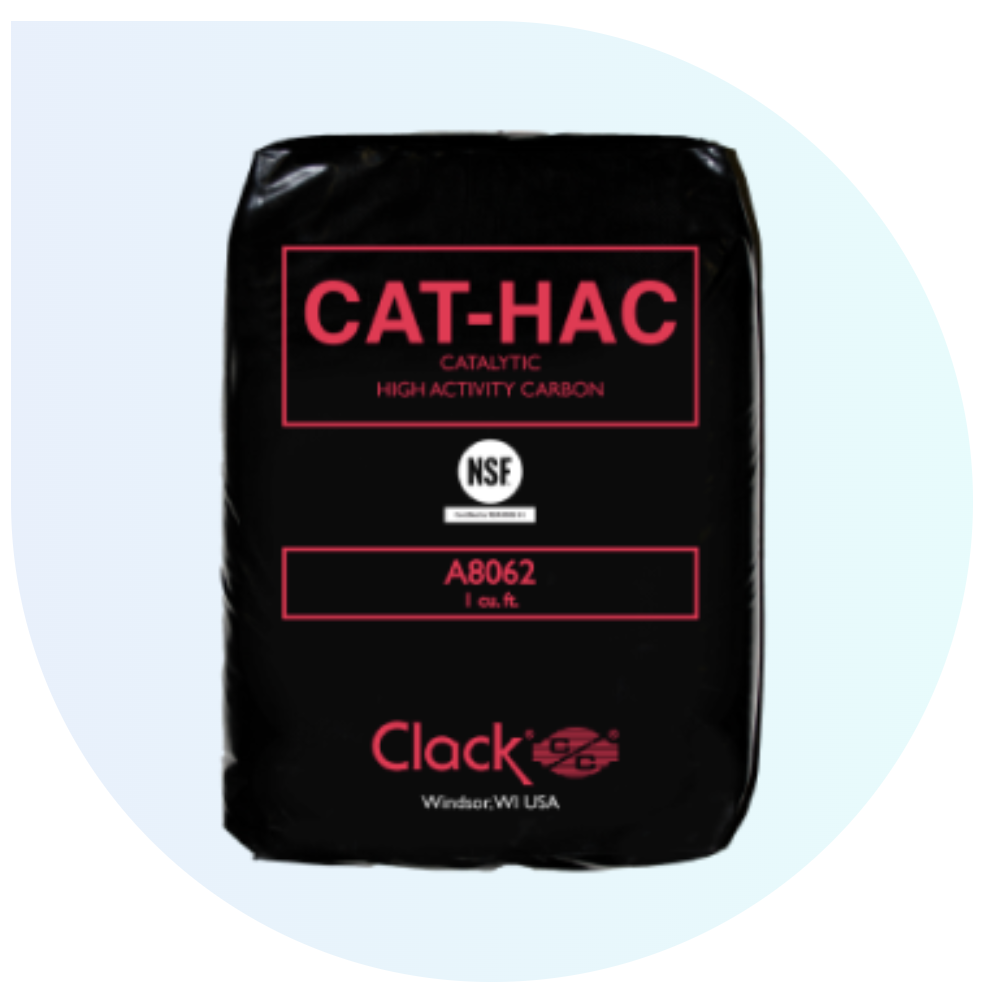
Clack CAT-HAC
CAT-HAC is a catalytic carbon product and should be considered separately from conventional CS-HAC.
Its intended use includes chloramine reduction, making it particularly relevant where combined chlorine is present.
Jacobi AquaSorb
AquaSorb is a broad activated-carbon family that includes products used for water purification and chlorine reduction.
Specific grades should be evaluated according to their carbon source and intended treatment application.
Haycarb PHO 14x45 AW
This product is an example of commercial activated carbon used in process-water dechlorination.
It can be considered alongside other industrial carbon grades where free-chlorine removal is the objective.
Haycarb Catalytic Activated Carbon
Haycarb also offers catalytic products for more demanding treatment applications such as chloramine removal.
These should be compared separately from standard free-chlorine GAC.
Nalco Water Activated Carbon
Nalco Water supplies activated-carbon solutions for industrial filtration applications.
This type of product is most relevant where carbon treatment forms part of a broader industrial water-treatment program.
What to Compare Before Choosing Filter Media
Start with the disinfectant being removed.
Free chlorine
A conventional high-activity activated carbon may be suitable.
Chloramine
Look specifically at catalytic media designed for chloramine reduction.
Then evaluate:
- expected flow;
- vessel or cartridge configuration;
- bed depth;
- carbon source;
- mesh;
- published service conditions;
- required certification;
- replacement strategy.
The best carbon is not simply the product with the greatest surface area or lowest price per pound.
The correct choice is the media that is appropriate for the disinfectant, water quality and filtration system in which it will operate.